Events
SKOPJE PRIDE WEEKEND 10: ECSTATIC BODIES
02/06/ 2022 – 11/06/ 2022
The Pride Weekend in Skopje is being held for the tenth time this year, and its goal is to create a space for presenting and promoting non-normative forms of secularization or, in other words, the relationships, affects, identity positions, body styles and sensibilities that are marked as queer, eccentric and unsuccessful by the heteronormative, nationalist and neoliberal capitalist context.
If we start from the assumption that intersectionality is the key paradigm through which all identity positions, including gender and sexual identities, are constructed and performed, with the program we want to offer a multifaceted critique of the binary gender system, heteronormativity and nationalist homophobia, as well as the intersections of oppressive, disciplinary regimes of power with class, ethnicity, race and health. Queer particularity, or queerness, as the initial idea of the Festival, denotes a way of life, an art of stylization of one’s own and collective life, a political tool and an attitude through which resistance is given against the dominant models of power/knowledge by which certain sexual and gender identities are orchestrated and regulated as “normal”, while others, on the other hand, are “deviant” and “perverted”. Queer political and cultural orientation engages in critical exploration and problematization of our desires and longings for conformity and normality, including hegemonic assumptions and values about love, intimacy, kinship, embodiment, capitalist competitiveness and egotism, commodity fetishism, as well as contemporary discursive-material performatives of the nation-state.
The focus of the Pride Weekend program is on cultural and artistic performative practices, including visual and contemporary art practices that address themes such as embodiment, affect, and subjectivity through various media. The selection is based on our commitment to the idea that the “aesthetic” is fundamentally rooted in bodily experience, and as such is at the heart of social, cultural, and political experiences. Hence, if political ideology and hegemonic cultural models transmit their own orders onto citizens’ bodies, thereby shaping their emotional orientations and sensibilities (the aesthetic domain), the body and affective and emotional relationships become a key site for the contemplation and creation of resistance and alternative life forms. In other words, heteronormative ideology and the masculinist cultural order operate through performances and rituals that mobilize and choreograph our movements, energies, desires, affects, and bodily potentials, and that regulate the relations between bodies in social spaces. Through performance art and body art, precisely these power pressures engraved on our bodies are mobilized and subversively redirected in alternative and non-normative directions. The body, in critical feminist and queer performative practices, represents a battlefield on which power relations are actualized and contested.
The thematic focus of the SPV 2022 is ELASTIC BODIESThis year's curatorial choice of the festival theme draws on feminist and queer heritage and current contributions to theory, art and politics, which positions corporeality, subjectivity and affect as central axes of critique, mobilization, performance and reflection.
Slavcho Dimitrov
Curator of Pride Weekend – Skopje
Program at the Museum of Contemporary Art Skopje
02 June / 20:30
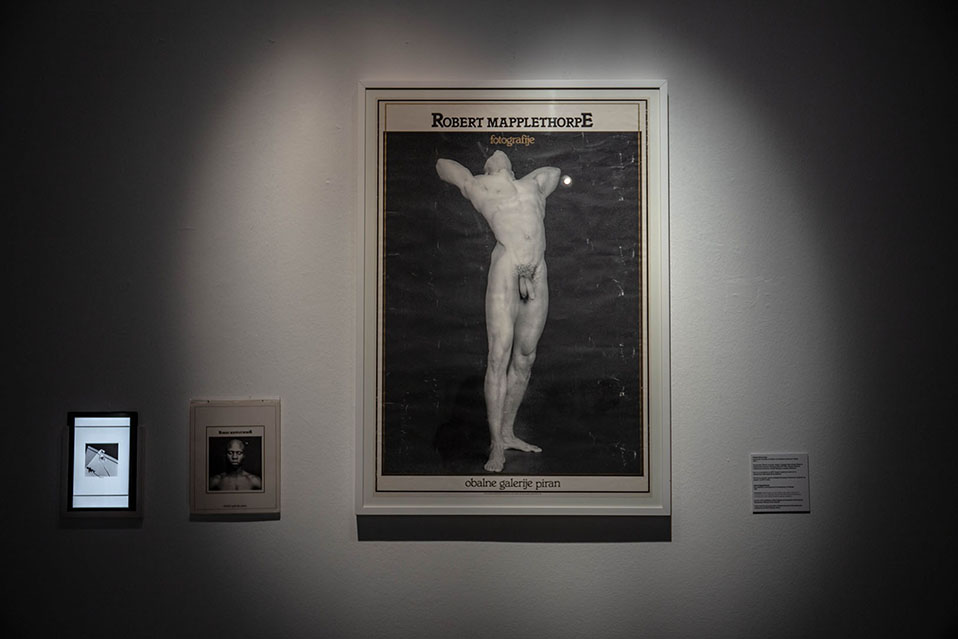
"Ecstatic Bodies: Archive of Performative Queer Bodies in Macedonia"
– Exhibition –
Curators: Slavcho Dimitrov and Biljana Tanurovska – Kulavkovski
Participating: Wolfgang Tillmans, Nora Stojanović, Sands Murray Wasink, Miloš Kodžoman and Dragoljub Bežan, Hristina Ivanoska, Velimir Žernovski, Jane Čalovski, Kočo Andonovski, Natasha Geleva, Mirko Popov, Zoran Ristevski – Bejbe, Ivana Dragšić, Sonja Ismail, TEMPLUM, Euro-Balkan Institute, Institute for Social Sciences and Humanities Skopje, Museum of Contemporary Art Skopje, STEAM ROOM, Aleksandar Georgiev, Dario Barreto Damas, Viktorija Ilioska, Laura Fer, Prva pa Zhensko, FRIC Festival, Skopje Pride Weekend, etc.
The exhibition is the result of a joint research and curatorial project by Slavčo Dimitrov and Biljana Tanurovska – Kjulavkovski. The research and exhibition focus on various performing, dance and curatorial practices, i.e. performative aspects in the field of art and beyond, in North Macedonia.
02 June / 20:30 ч.
Alexander Georgiev
„Одеци на С“ (Echoes of. S)
a landscape-choreographic work
*The work will be performed during the opening of the exhibition "Ecstatic Bodies: Archive of Performative Queer Bodies in Macedonia"
“Echoes of S” is an artistic offering by choreographer Aleksandar Georgiev within his ongoing interest in “anal politics.” The work is choreographed in collaboration with art photographer Martin Atanasov, creating an environment that activates the spaces between live performance and photography, focusing on the poetic potential contained in the anus, conceptually and physically.
Choreography and performance: Alexander Georgiev Photography: Martin Atanasov Music: Cvetan Momchilov; Design: Gjorgji Despodov
Produced by Aleksandar Georgiev. Co-produced with ICC (Imaginative Choreographic Center), Garage Collective, Lokomotiva – Center for New Initiatives in Art and Culture and Margin Coalition.
The project was realized with financial support from the National Fund for Culture of Bulgaria, within the framework of the project "ICC Annual Program 2022", organized by the Garage Collective, and financial support from the Ministry of Culture of North Macedonia, as part of the Lokomotiva project "Choreographed Bodies".
02 June / 22:00 ч.
Hristina Ivanoska
"The Missing Document: Performance No. 6 (Daughter)", 2017/2022
*The performance will be performed during the opening of the exhibition "Ecstatic Bodies: Archive of Performative Queer Bodies in Macedonia"
Memories are raw speech material. Memories are tainted and impure. How do we get to the beginning of memory? How do we return to the experience that is the core of what we later call "memory" if we only have the materials that have already been processed by the investigator, the historian, the journalist, the writer? How do we dive between the words, and extract the essence?
Starting with the seemingly simple question “Who am I?”, Ivanoska finds her interlocutor in the character of Rosa Plaveva, a revolutionary from the early 20th century who lies forgotten in the archives of the past. “The Missing Document: Performance No. 6 (Daughter)” is an attempt to tell a story about power, speech and punishment, and about the injustice, insult and trauma that is inflicted and with which one has to live. The focus is on the life of Nadezhda Plaveva Stanojevic, Rosa Plaveva’s daughter, who during the Inforbiro (1948-1956) was imprisoned by the UDBA (Yugoslav State Security Administration) and sent to Goli Otok. She will speak about her traumatic experience in the feuilleton “Ibeovci”, which was published in the Serbian newspaper “Borba” in 1990.
“Performance No. 6 (Daughter)” is part of Ivanoska’s ongoing research project titled “The Missing Document” (2014–) that deals with repressed collective memory in relation to women’s strategies and politics of resistance. As the sole protagonist in her performances, Ivanoska becomes a flexible and porous entity, a medium through which different identities and voices from the past are brought back to life. Through her texts and actions, she creates situations that „биле или не биле“ и кои флуктуираат низ време и простор, засновани врз документи и орални интерпретации. Таа го користи перформансот како метод, медиум и метафора.
Photography: Jane Chalovski
Hristina Ivanoska (1974) Through her artistic research practice, she critically explores the experience of today's social and political systems and their relationship to theory and history. Ivanoska creates objects, texts, drawings, videos, performances and installations, often working interdisciplinary, but giving value and meaning to handcrafts such as embroidery, weaving, pottery and patchwork techniques or mosaics of pieces of cloth, as media of political and social value through which individual struggle and limitations are expressed.
03 June / 21:00 ч.
Џули Толентино и Стош Фила (Julie Tolentino & Stosh Fila)
Performance-installation and process performance
.bury.me.fiercely.
In collaboration with: Ivana Dragšić, Jovan Josifovski, Aleksandar Georgiev, and Jovan Gakovski
*The performance will be followed by a presentation and conversation with Julie Tolentino.
As the sun sets and night falls, the performers move, strum, work, and shift, hidden beneath a blanket of dense "horizon" made of leather, scented oils, herbs, reflective surfaces, and dense sound.
Tolentino reaches for the sensual and speaks of the subjective excess of every encounter. Space and time open up to the stories of the Others: mislabeled, unseen, or overlooked, along with the inspired visionaries who manage to exist as otherworldly queer creators of the future.
The mirrors, which draw from Tolentino’s works, archive and community, reflect our obsession with the ever-expanding register of ghosts. References to a body aging at a leisurely pace within a soft fleshy void that conceals the body but occasionally reveals its parts through numerous holes, edges. With neoliberal notions of the healthy white body and wholeness as a backdrop, the figures are marked, desired and wrong: aging, brown-skinned, queer, decaying, disabled.
Во .bury.me.fiercely. Mr. Exhibit A, The Shiny Dark Figure and others unfold a certain, omnipresent attitude and embodiment – even when it cannot be seen. In the background, a video of the artist-as-object/artist-outside-time of the notorious Fire Island as a performer in some kind of void runs. Tolentino tunes us into spaces that abundantly blur, yet still encourage our dark interiors and fugitive poetics with the future past of time.
Seen or unseen, legible or not, the performance reopens faded spaces in which bodies can step foot, wander, and change – while in the process regurgitating another time through our and the performer’s interventions. We entangle ourselves as disassembled and reassembled surfaces and selves.
This work not only runs out slowly, but also turns back time. Bodies do not heal, but unfold.
.bury.me.fiercely. it requires us to stay with the loss, the resistance, and the pain.
Credits and Acknowledgment: The sounds of REPEATER were collected and developed in collaboration with two long-time collaborators from the East and West Coasts: New York artist Aldo Hernandez – who plays live – and Los Angeles artist Robert Crouch.
The performance is dedicated to Tolentino's long-time collaborator/partner, Stosh Fila.
Julie Tolentino (performer/concept) is an artist of Filipino and Salvadoran descent who explores the interspaces of race, gender, relationality, and archive in her performance/installations. Collaborative projects include videos, objects, glass, mirror, scent, landscape, and texts that originate from “outside” spaces of learning about activism, otherness, advocacy, loss, and caring. Tolentino’s work has been presented in museums, galleries, and festivals.
4 June / 21:00 ч.
Дејвид Хојл (David Hoyle)
"David Hoyle: Live in Skopje"
From the dark, solitary life of quarantine, David Hoyle returns to the light to create an opportunity for healing, for coming together in mutual love and support – "in togetherness we will find strength," says David.
The meteor of the cabaret apocalypse, David is an authentic performance avalanche – a true singing, untamed legend.
David Hoyle is the winner of the "Icon" and "Originality" awards at the 2019 QX Cabaret Awards.
"The greatest living performer." – Justin Vivian Bond
"Untouched, sometimes terrifying, but also exciting in its 'look – I can do it without hands' carelessness." - The Guardian
"There is nothing like it: bold and unique, electrifying and disarmingly human." - "Time Out"
David Hoyle
A Manchester-born performance artist, David Hoyle rose to fame in the 1990s as Divine David, an anti-drag queen with a scathing social commentary aimed at bourgeois Britain and the materialistic, hedonistic gay scene, which he calls "the biggest suicide cult in history" – offset by incredible instances of self-blame and even self-harm.
7 June / 20:30 ч.
Jasmine Tumbas
Lecture: "I am Yugoslav!: Feminist performative politics during and after Yugoslav socialism"
Jasmina Tumbas will discuss her latest book, I Am a Yugoslav!: Feminist Performance Politics During and After Yugoslav Socialism (Manchester University Press, 2022). For Pride Weekend in Skopje, Tumbas focuses on the emergence of the “queer” Yugoslav woman, as she defines it, including a discussion of the context in the 1980s, as well as the legacy that remains today. The conversation will share a visual history of the Yugoslav lesbian and queer movement – which privileges women’s explorations of their own gendered power in music, avant-garde art circles and performance art; while exploring influences in contemporary visual culture and art, including the emergence of transgender resistance and queer life in newly formed national contexts.
Jasmine Tumbas (PhD in Art History, Duke University) is Assistant Professor of Contemporary Art History and Performance Studies and Director of Graduate Studies in the Department of Global Gender and Sexuality Studies at the University at Buffalo. Her first book, I Am Yugoslav!: Feminist Performance Politics During and After Yugoslav Socialism, was recently published in Manchester University Press’s Rethinking Art Histories series (February 2022). Tumbas is also working on her second book, Feminists of the Yugoslav Diaspora: Art and Resistance Beyond Citizenship and Nationality.. Се јавува и како гостин-уредник на специјалното издание на „Газета артликс бр. 5: Патријархатот завршен и исклучен: манифестен дискурс“, додека резултатите од нејзините истражувања се објавуваат во „Артмаргини“, „Камера опскура: студии по феминизам, култура и медиуми“, „Месечник за уметност“, „Уметноста во Америка“, „Журнал АСАП“, „Уметност и документација“, како и во антологиите „Промена на корпореалностите во современиот перформанс“ и „Перформансната уметност во втората јавна сфера“.